Monday, September 24, 2012

10 Most Important Facts About Vets


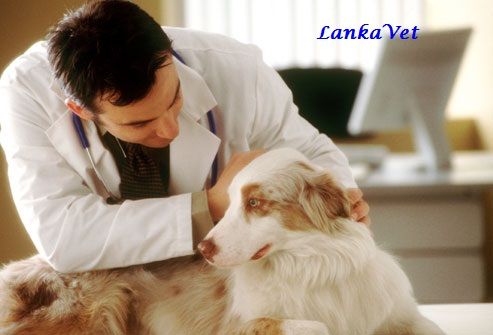
Veterinarians are doctors for pets, zoo animals, horses,  livestock and other animals. Like human doctors, vets care for their sick  and injured patients. Veterinarians  also perform surgery and prescribe medications to animals that require it. In addition, vets are responsible for the animal's preventative care, like giving checkups and administering vaccinations.


Vets Must Have a Bachelor's Degree

  • In order to be admitted to veterinary school, a prospective student must go to college and obtain a four-year bachelor's degree. For their undergraduate education, future veterinarians must study biology, nutrition, animal science, chemistry, physics, math and English. Many vets also worked at animal hospitals and local shelters while in college.


Vets Must Attend Veterinary College


  • After college, future vets must attend veterinary college for an additional four years. Admission into veterinary school is competitive, and prospective students must have excellent grades. During veterinary school, students are taught how to work with animals, perform surgery and do lab tests. Once veterinarians graduate from school, they must pass a test to earn their license to practice.

Veterinarians Have Unique Specialties

  • Similar to medical physicians, veterinarians can choose to specialize in certain areas. After receiving their veterinary medicine license, vets can choose to complete intensive training in a veterinary specialty, such as oncology, radiology, animal dentistry, dermatology, cardiology, preventative animal medicine, internal medicine, exotic small animal medicine and surgery.

Not All Vets Practice Veterinary Medicine

  • A majority of licensed veterinarians work in private medical practices and see animal patients, but some vets prefer to use their education and skills to do research. Some vets work in basic research, studying about animals and medical science; others work in applied research, where they figure out new methods of using what they know about animals and applying it to humans. Vets who work in clinical research use their knowledge of animals and apply it to human problems.

Veterinarians Don't Just Take Care for Dogs and Cats

  • About 77 percent of American veterinarians are in private practices, where they care for dogs, cats, and other animals commonly kept as pets, such as rabbits, ferrets and birds. But 16 percent of vets work in food animal or private mixed practices, and they care for wild animals and farm animals, such as pigs, cattle, sheep and goats. The other 6 percent works only with horses.


Vets Have Ample Job Opportunities

  • In 2008, vets held approximately 59,700 jobs. Roughly 80 percent of vets worked in a group or solo practice. The other 20 percent worked in research labs, for the government, in a private industry, or at a college or university. Annual, the U.S. government employs about 1,300 civilian veterinarians. The employment outlook for vets is excellent. Between 2008 and 2018, the number of jobs for vets is predicted to increase by 33 percent.

Vets Can Make More Than $70,000 a Year

  • Although the typical salary of a veterinarian is not as high as a medical doctor, the median annual income for a vet in 2008 was $79,050. The highest-earning vets grossed over $143,000 annually. Veterinarians who work for the federal government should expect to make more than the median. In 2009, the average yearly salary for these vets was $93,398.

Vets Have Tough Work Environments

  • Being a veterinarian means you have to work long hours in a noisy environment. Vets who work in a group practice often take turns being "on call" at night or on the weekends. Veterinarians who work in private, solo practices often work longer hours, including on the weekends. Vets deal with emotional and demanding pet owners on a daily basis. They also face the risk of being injured, bitten, kicked and scratched by frightened or aggressive animals.

Veterinarians Must Take an Oath

  • When a new vet graduates from a veterinary school in the U.S., they are required to make an oath that swears they will use their scientific knowledge for the benefit and protection of animal health and welfare. They solemnly swear to relieve animal suffering, advance medical knowledge, promote public health, and practice their profession with dignity, conscientious, and abiding by veterinary medical ethics.


Vets Must Love Animals and Have People Skills

  • In order to be a successful veterinarian, a person must love animals and want to help them. Vets must also have good people skills. They must know how to deal with pets and their owners. Pet owners can be very demanding, confrontational and emotional, especially when it comes to a sick or dying animal.

Saturday, September 22, 2012

Common Diseases of Backyard Poultry


The keeping of backyard poultry gives great enjoyment to many people. The production of fresh eggs and meat for human consumption, plus the enjoyment they give as pets or show birds, makes poultry valuable members of many families.
Poultry may become ill from many causes. There are a few major categories of diseases that commonly occur in small poultry flocks.

External parasites  

Poultry can carry a large variety of parasites on their bodies. They should be examined regularly, and treated for external parasites every two to three months.
These parasites range in size from large, blood sucking ticks up to 1 cm in size, down to the microscopic scaly face mite that is less than 0.5 mm in size. Other external parasites that are commonly encountered are the flea and lice.    
External parasites generally cause mild clinical signs such as feather damage, anaemia and irritation.


Internal parasites 

Backyard poultry also carry a wide range of internal parasites. Internal parasites attack the lining of the intestine, and absorb nutrients from the bird’s gut for maintenance of its own body and multiply for production of eggs.
Clinical signs of internal parasitism may include weight loss, pale combs or diarrhea.
Large round worms can be visible with the naked eye.  They are transmitted by the ingestion of eggs from the faces of infected birds. Regular removal and cleaning of faces from the bird's enclosure will result in less worm eggs in the environment, and less chance of worms spreading from bird to bird.
Intracelluler parasites can only visible under a microscope - Eimeria and Giardia
       
Marek's disease

Marek's disease is a viral infection that only affects poultry. The virus is spread from bird to bird in feather dander and dust. It lives in the environment for long periods, and can spread between properties on people's clothes and on shared equipment. Birds are usually infected at a young age, but may not show signs of disease until some months later.
The virus that causes Marek's disease attacks the white blood cells of the bird, and results in cancer. These cancers most commonly affect the nerves and cause paralysis. Usually, the legs are affected, but the tumors may also affect the nerves in the wings and neck.
Birds may also develop tumors in the body. As they grow, these tumors may cause a number of signs including weight loss, diarrhea, ill thrift, and difficulty breathing.
A vaccine should be given to birds at one day of age. It is recommended that all birds be vaccinated, even though the vaccine is not as effective as it used to be. This is due to the virus that causes the disease mutating slightly over time. Most large hatcheries vaccinate their chicks, so birds purchased from them should be protected, and vaccine is available at a reasonable cost for birds hatched privately.

Leucosis

Avian leucosis is also a viral disease affecting chickens which causes tumors or cancers. These tumors occur in older birds than those affected by Marek's disease, usually more than 6 months old. It causes listlessness and loss of weight and the bird eventually dies.
The viruses affect the white cells and tumors usually appear in the liver and spleen but also in other sites. Sometimes the tumor appears as white lumps, at other times the liver and spleen appear larger than normal. The viruses are transmitted through the egg and commercial producers attempt to eliminate it from their strains of birds. There is very little that a poultry owner can do except keep the bird comfortable and destroy it when life becomes unpleasant for it.

Respiratory disease

There are many causes of respiratory disease in poultry. Respiratory signs such as coughing, sneezing and discharge from the eyes and nostrils can be caused by parasites (gapeworm - Syngamus trachea), dust, high ammonia levels, or a variety of bacteria or viruses.
In all cases, a veterinarian with experience in poultry disease must diagnose the exact cause, particularly if mortalities occur. Some of the respiratory viruses such as Infectious Laryngotracheitis Virus (ILT), Newcastle Disease and Avian Influenza are notifiable or exotic diseases, and must be reported to a Government Veterinarian if they are suspected. Treatment will depend on the cause of the respiratory signs. For some viral causes such as ILT, vaccination is recommended.


Fowl pox

Another viral infection of birds is fowl pox. This disease is spread by biting insects and sometimes by fighting. The virus enters the body through a scratch or scrape, and raised scabs form on the scratch and surrounding areas. Scabs can also form in the mouth and throat. Most cases improve without treatment, although some birds become ill from secondary infection. Birds that recover are immune for life.
Prevention is only by vaccination, this may need to be done every few years to give complete protection.


Nutritional deficiencies

Many small flocks of birds are fed only table scraps. This diet is not sufficient to meet the nutritional demands of growing birds or layers. Common deficiencies include calcium (resulting in poor bone growth and rickets), energy (poor growth, weight loss, poor egg production), and vitamin A (poor skin and feathering). Formulated diets are available for all stages of a hen's life, (starter, grower and layer) and these should be fed in conjunction with table scraps, fruit and vegetables to form a balanced diet.
 
Reproductive problems

Commercial birds are bred to lay for only one, or two laying seasons. If they are then sold to backyard producers for extended laying, they are prone to reproductive problems. This includes egg binding (where the egg is unable to be passed out of the bird), metritis (inflammation of the oviduct and shell gland), and yolk peritonitis (free yolk in the abdominal cavity, leading to infection).
Affected birds stop laying eggs, are depressed, stop eating and eventually die. They often develop a swollen abdomen, and may have respiratory difficulties. Surgery by a veterinarian is possible to resolve these conditions, however, the surgery results in the bird being unable to lay eggs. Hence, it is reserved only for pet birds.

Exotic disease

Newcastle Disease and Avian Influenza are the major exotic diseases small poultry keepers need to be aware of.
Signs of Newcastle Disease range from mild respiratory signs to very severe depression drop in egg production, diarrhoea, collapse and nervous system signs. Death rates can be up to 100%.
Avian Influenza often appears suddenly, and birds die quickly. Diarrhoea, depression, decreased egg production, swollen and discolored wattles and respiratory signs may all be observed.
You can prevent your birds becoming infected with these diseases by limiting their exposure to migrating waterfowl and wild birds that can carry these viruses. Preventing overseas visitors who may be inadvertently carrying the virus, from accessing your birds and refusing to accept birds or eggs that may have been imported will also decrease the chances of your birds becoming infected.


Wednesday, September 19, 2012

Round worm Infection in Sheep


Roundworms are the most important causes of production losses in sheep, especially in areas with moderate or high rainfall.

The common roundworms in sheep belong to 3 genera,
Haemonchus - Barber's Pole worm
Ostertagia - small brown stomach worm
Trichostrongylus - stomach hair worm

These worms are commonly found together in mixed infections and each species has a similar effect on the host. All three species live within the abomasum of the sheep; the adult worms suck blood whilst attached to the wall of the abomasum.
Peak risk periods for roundworm infection occur during warm and wet conditions in autumn through to spring, which provide the right environment for larvae to survive in the pasture and infect stock. The life-cycle of most worm species slows over the cold winter period.


Brown stomach worm   - Ostertagia

Brown stomach worm is found throughout all sheep production areas. It poses a threat mostly between autumn and spring when conditions are warm and moist. It may also appear in the summer months if moisture is available. Sudden outbreaks are rare, so strategic control during spring and autumn usually provides good control. Care must be taken to ensure an effective drench is used against this species because drench resistance is common.


Black scour worm - Trichostrongulus colubriformis

Black scour worm thrives mainly between autumn and spring when conditions are warm and moist, but may cause problems in summer if conditions are wet. It can occur in all areas. Numbers tend to build slowly, so strategic control at appropriate times in spring and autumn usually prevents problems.

Barber's pole worm   - Haemonchus contortus

Barber’s pole worm may be a regular problem in localized coastal areas, but outbreaks can occur anywhere if conditions are favorable. Populations can build quickly because of its huge egg output and they are large, blood-sucking worms, so impacts, including severe anaemia and death, can occur rapidly. Regular monitoring using worm egg counts  when conditions are favorable and strategic use of effective drenches is essential to prevent major production losses.

Thin-necked intestinal worm -   Nematodirus

Thin-necked intestinal worm requires warm, moist conditions, so causes most problems between autumn and spring. The larvae can survive extended periods of dry conditions within their eggs. This can lead to a massive build up in the pasture with mass hatching events and huge infection rates occurring with the onset of moist conditions.

Roundworm control

Strategic control during spring and autumn is critical to prevent production losses and minimize pasture contamination. Aim to treat as the worm population starts to increase to significant numbers. This means treatments will occur in relation to actual seasonal conditions rather than calendar dates.

During summer, favorable conditions could occur which could lead to the need for a second summer drench. Regular monitoring using worm egg counts when conditions are favorable can assist in getting treatment timings right. Pay greater attention to susceptible, young stock, which may require additional treatments. This approach will provide good control of roundworms in most circumstances.


Monday, September 17, 2012

Mama Kitty's Rescue


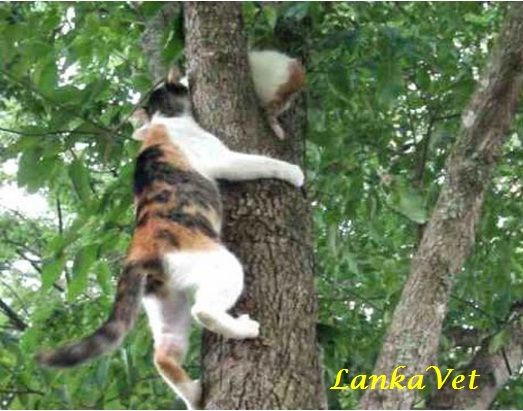
Kitten up in tree does not know how to come back down and it is given encouragement from her Mama Kitty. 
Observe well Mama Kitty's valiant effort to bring her kitten down from the tree. 


Clearly, she gets exhausted by the effort in climbing down, she showed her kitten how to get down, ultimately accomplishing her goal.  

Friday, September 14, 2012

Embryo transfer technique


The world is broadening the margins of bio-technology, reaching the top achievements in it with experiments like cloning, test-tube babies and such things. We, Sri Lankans also have proved that we also have the ability in practicing the developed bio-technology.

 Dr. Basil Alexander
"We have enough human resource that has the ability to handle the developed technology and can create high standard offspring", says Dr. Basil Alexander, senior lecturer in the Department of Health and Animal Production at the University of Peradeniya. A consultant embryologist is a leading figure who engages in biotechnology, practicing the embryo transfer in animals.
The embryo transplant is a process by which an embryo is collected from one female (donor) and transfered to another female (recipient) to complete the gestation period. This can also be considered as a type of artificial insemination, but what differentiates here is, it multiplies the genetic characters of the female, while in artificial insemination it is of the male. The reproduction potential of a female is enormous as her ovaries contain about 150,000 'eggs' or ova at the time of birth. Each egg has the potential of developing to an embryo and to an offspring. But in natural reproduction she does not make use of a large fraction of her reproductive potential as she uses only a fraction of those eggs. For instance a cow will give birth to an average of 8-10 calves for her life time. But in the embryo transfer technique, it can utilize the maximum reproductive potential of a genetically superior female animal that results in hundreds of superior offspring on the ground. Thus a lot of countries engage in this technique to increase farm production mostly using cows, horses, pigs, goats and other farm animals.

An embryo seen through a microscope
In Sri Lanka this technology is being practicd since 2007 by a research team under the assistance of Dr. Alexander who returned to Sri Lanka after specializing this technology for his PhD. They succeeded in the first experiment level embryo transfer that gave birth to 'Apeksha', the cow and in 2008 an experiment resulted in 'Peradeni Kumari', the female goat kid. For two years now 70 calves have been calved. The embryo transfer technique has some steps as selecting a genetically superior female which has a high milk producing capacity, high meat producing capacity and high resistance for diseases; super ovulation of the donor which means use of reproductive hormone (follicular stimulating hormone, FSH) on the embryo donor animal for 2-3 days in order to ovulate many numbers of eggs (multiple ovulation) from her ovaries; the insemination of the female following super ovulation which make the eggs fertilize in uterus, then the embryos develop; they are collected by embryo flushing technique and evaluated to transfer the excellent embryos into the uterus of the recipient animals; embryo transfer; the particular animals are examined for pregnancy using ultrasound scanning and then well cared.

This whole process will cost about Rs.40, 000 for a single animal. Anyhow this process gains more validity as the calves get accustomed to the new atmosphere as they are getting protection from diseases from the colostrums of the recipient mother's milk which has antibodies. This method is conducted in both surgical-used in animals like goats- and non-surgical method, mainly used in animals like cows.

                                                                           The first cloned female goat kid Peradeni Kumari with her mum  
The embryos which are transplanted in the Sri Lankan cows were imported from Australia, which are with high pedigree cattle like Jersey, Friesian and AFS (Australian Friesian Sahiwal). These embryos are frozen by an embryo freezer and then preserved in liquid nitrogen which is of -106 degrees and that can be kept for a long time even like 200 years.
Anyhow the success of this technique is of 50 percent in Sri Lanka which is ample while in other countries it is of 80 percent. We fail for some extent in this, mainly because some imported embryos become infertile when it is transplanted and also the short comings in special nutritious food for the embryo recipients. If we have elite cows that give embryos which can be transplanted with a short period this process will be more successful.
The cloned cows
So Dr. Alexander is planning to create an "elite herd" which results in multiple farms and then multiple farms result in commercial farms. The specialty of this technology is it can be mainly used in conserving endangered animals. So now this is practiced in zoological gardens all over the world.

The laboratory which is used in these experiments was established in the University of Peradeniya in 2006. The financial assistance was given from the Council for Agricultural Research Policy (CARP) and the equipment was donated from the University of Guelph, Ontario, Canada. The laboratory is now conducting researches in indigenous animal conservation using their semen, somatic cells and germ plasm cryobanking; and wild buffalo conservation using reproductive biotechnologies and investigation of wild buffalo and indigenous buffalo genetic diversity using DNA molecular techniques.

At the same time, plans are underway to breed generically superior horses in Sri Lanka through Artificial Insemination using horse semen imported from USA. The laboratory also provides consultancy services to cattle embryo transfer project in the National Livestock Development Board in Sri Lanka and also provides services (field infertility clinics) for cattle and goat farmers to overcome reproductive problems among the livestock breeds. The team is planning to clone animals using somatic cell nuclear transfer technology.
All these researches are conducted with the assistance of Council for Agricultural Research Policy (CARP), Ministry of Livestock and Development, Department of Animal Production and Health and Dr. Chandravansa Pathiraja, Chairman of National Livestock Development Board.


.

Wednesday, September 12, 2012

Sarcoptic Mange - Canine scabies


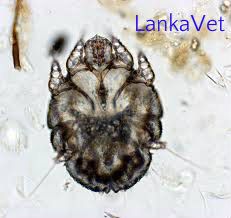
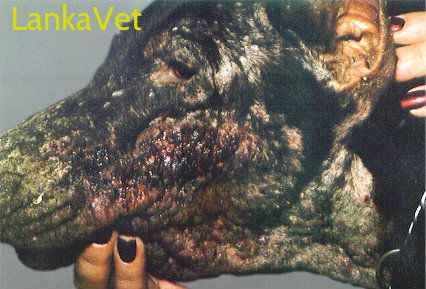
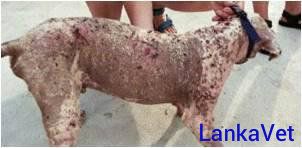
Sarcoptic mange or Canine scabies in dogs, is caused by the parasite Sarcoptes  scabiei. These microscopic mites can invade the skin of healthy dogs or puppies and create a variety of skin problems, the most common of which is hair loss and severe itching. While they will infect other animals and even humans, sarcoptic mites prefer to live their short lives on dogs. Fortunately, there are several good treatments for this mange and the disease can be easily controlled.    
                                                                                                                                                                
Who gets canine scabies?

Canine scabies can infect all ages and breeds of dogs. While it prefers to live on dogs, this particular mite will also infect cats, ferrets, humans, and fox. Cats, fox, and humans all have their own particular species of mite within the Sarcoptes family. Each species of mite prefers one specific kind of host (e.g.; dog), but may also infect others.

What is the life cycle of Sarcoptes scabiei?

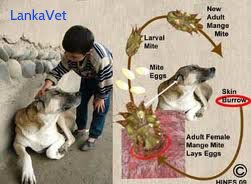
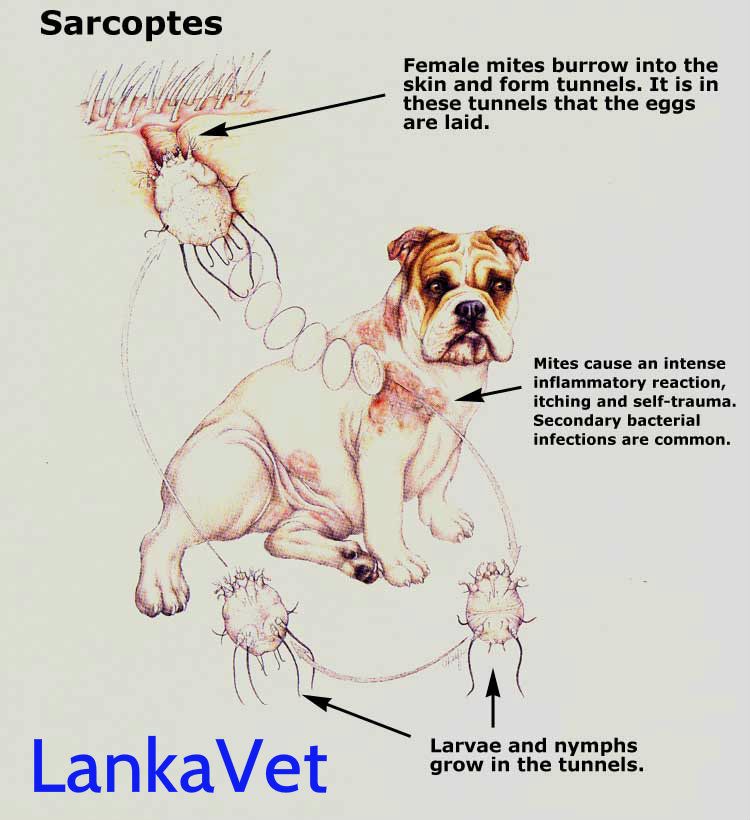
The mites usually spend their entire life on a dog. The female mite burrows into the skin and lays eggs several times as she continues burrowing. These tunnels can actually reach the length of several centimeters. After she deposits the eggs, the female mite dies. In 3-8 days, the eggs hatch into larvae which have 6 legs. The larvae mature into nymphs which have 8 legs. The nymph then molts into an adult while it is still in the burrow. The adults mate, and the process continues. The entire life cycle requires 2-3 weeks.
The mites prefer to live on the dog, but will live for several days off of the host in the environment. In cool moist environments, they can live for up to 22 days. At normal room temperature in a home, they will live from 2 to 6 days. Because of the mite's ability to survive off the host, dogs can become infected without ever coming into direct contact with an infected animal.

What are the symptoms of canine scabies?

The symptoms of canine scabies are varied, but usually include hair loss and severe itching especially on the elbows, ears, armpits, hocks, chest, and ventral abdomen (belly). The mites prefer to live on areas of the skin that have less hair. As the infection worsens it can spread over the entire body. Small red pustules often develop along with yellow crusts on the skin. Because of the severe itching and resultant scratching, the skin soon becomes traumatized and a variety of sores and infections can develop as a result. The itching seems to be much worse in warm conditions such as indoors or near a stove or heat vent. If the infection goes untreated or is mistakenly treated as an allergy, the skin may darken due to the constant irritation, and the surrounding lymph nodes may become enlarged.

Sarcoptic mange is a somewhat common infection and many cases have often been misdiagnosed as severe atopy (inhalant allergy). Any time we see a dog who does not have a prior history of allergies and develops severe itching, or if the itching is not seasonal but year-round, we have to suspect canine scabies.
The intense itching caused by the sarcoptic mite is actually thought to be caused from a severe allergic reaction to the mite. When dogs are initially infected with Sarcoptes they do not develop itching for several weeks. If the animals are treated and then reinfected at a later time, severe itching starts almost immediately, which indicates the itching may be due to an allergic reaction. However, the standard treatments for allergies generally will not decrease the symptoms of scabies, and will do nothing to cure the disease.

How is canine scabies diagnosed?

Trying to make a diagnosis of canine scabies may be very frustrating. The standard method is to perform a skin scraping and then identify the mite under the microscope. Unfortunately, on average, only twenty percent of the infected dogs will show Sarcoptes mites on any given scraping. Therefore, if a dog has a positive skin scraping, the diagnosis is confirmed but a negative scraping does not rule out sarcoptic mange. Therefore, most diagnoses are made based on history and response to treatment for scabies.

How is scabies treated?


There are several ways to treat scabies. In the past, the most effective treatment had been to clip the dog if he had long hair, bathe him with a benzoyl peroxide shampoo to cleanse the skin, and then apply an organophosphate dip. Amitraz dips, Mitaban, and lime sulfur dips have also been used effectively. The dogs are usually dipped once every two weeks for two to three times. 


While effective, these dips are very unpleasant to apply for both the  owner and the dog. Because the dip must come in contact with the mites and many mites live on the face and ears of dogs, great care must be exercised when applying these dips to these sensitive areas. The dips can be toxic to humans and are not suitable for very young, old, or debilitated animals. In addition, there are some reported cases of resistance to these dips in some cases of sarcoptic mange.
Fortunately, there are several other products that have been extremely effective, safe, and convenient in treating sarcoptic mange. Selamectin is a topical solution that is applied once a month and also provides heartworm prevention, flea control, some tick protection and protection against Sarcoptic mange. Frontline Plus, Frontline Top Spot, and Frontline Spray are also labelled for use as aids in controlling sarcoptic mange. Liquid ivermectin is an off label alternative that is sometimes used. It is used at much higher concentrations than are found in heartworm preventives. Ivermectin should not be used in Collies or Shetland sheep dogs and should be used with caution in the herding breeds. In dogs that are sensitive to ivermectin, some veterinarians have been having success using milbemycin oxime at an off-label dose. All of these products should only be used under direct veterinary supervision and care.
In addition to treating the dog, the environment such as the dog's bedding can be treated with a residual insecticide. Since Sarcoptes scabiei is easily transmitted between animals, all dogs in contact with an infected animal should also be treated. Because of the length of the life cycle and ability of the mite to live off of the animal, treatment must continue for a minimum of 4 weeks.
Because of the damage to the skin in sarcoptic mange, many dogs also have bacterial and or yeast infections. These need to be treated as well.

How is canine scabies prevented?

Because your dog does not have to come into direct contact with an infected dog to contract scabies, it is difficult to completely protect him. Places where large numbers of dogs congregate are obviously more likely to harbor the mange mite. Since fox and the environment in which fox may spend a large amount of time can transmit the mite to dogs, keep dogs away from fox and these areas.

Can I get Sarcoptes from my pet?

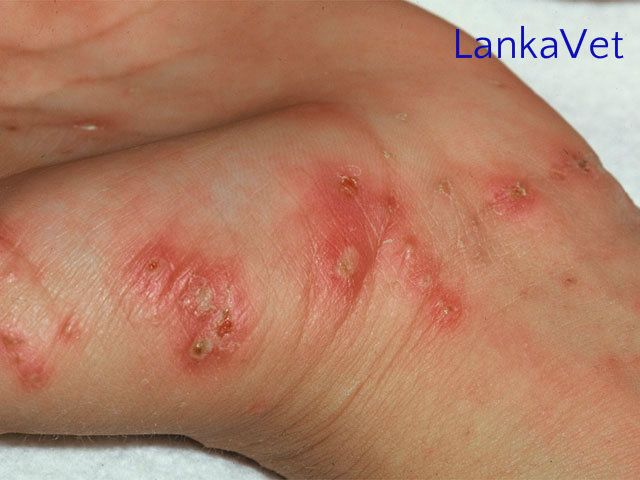
Yes, although when humans get Sarcoptes scabei from animals, the disease is generally self-limiting, causing only temporary itching. There is a human species of Sarcoptes, which is transmitted from person to person. This human species of sarcoptic mite causes a rash on the wrists, elbows, or between the fingers. In infants, the rash may appear on the head, neck, or body.