 Here you will learn more about
cat pregnancy and how to assist your cat prior to and during delivery. If your
female cat, foster cat or if you welcomed a stray pregnant cat into your home,
the first thing you need to do is to take her to the Vet. Note, in the case of
a stray cat, you will need to have her tested for FeLV and FIV, and ask your
Vet about the pros and cons of vaccination.
Here you will learn more about
cat pregnancy and how to assist your cat prior to and during delivery. If your
female cat, foster cat or if you welcomed a stray pregnant cat into your home,
the first thing you need to do is to take her to the Vet. Note, in the case of
a stray cat, you will need to have her tested for FeLV and FIV, and ask your
Vet about the pros and cons of vaccination.
Signs that your cat is
pregnant.
 If your female cat is not
spayed and was in heat when she met a male cat that is also not neutered, you
should prepare yourself for the new addition that will come in soon. Cat
Pregnancy period normally runs from 57 to 69 days, with the average of 63 to 64
days.
If your female cat is not
spayed and was in heat when she met a male cat that is also not neutered, you
should prepare yourself for the new addition that will come in soon. Cat
Pregnancy period normally runs from 57 to 69 days, with the average of 63 to 64
days.
Cats will start showing signs
of pregnancy in about three weeks, which include physical and personality
changes.
Physical changes in a pregnant
cat include:
* Increased appetite
 * Nipples swell and become
rosier in color
* Nipples swell and become
rosier in color
* Heat cycles cease
* Abdominal enlargement
* Nausea/Possible Vomiting
Personality changes in a pregnant cat include:
* "Nesting" -
searching for a secluded place to nest prior to delivery
* Increased need of affection
and attention from her owner
* Irritability toward other
pets
The number of kittens in a
given litter is hard to predict, although it can range from one to eight
kittens. Your veterinarian may be able to tell you the correct number of
kittens by counting the heads - by palpating your cat's abdomen, or he can
perform an ultrasound.
 Things to do during your cat's
pregnancy.
Things to do during your cat's
pregnancy.
If your cat was healthy prior
its pregnancy, it will be easier to keep her in good health through delivery.
Although, if your cat had any health issues or issues prior its pregnancy, make
sure your veterinarian will be involved throughout the entire pregnancy time
and delivery.
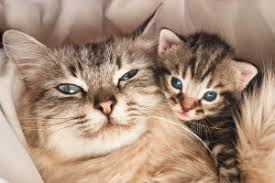 A pregnant cat will need to
exercise, have a balanced nutrition and plenty love and care. You can play with
your cat as before its pregnancy, she will tell you how far she can go. By
engaging in normal exercise during cat pregnancy will help the cat to maintain
her muscle tone and good health.
A pregnant cat will need to
exercise, have a balanced nutrition and plenty love and care. You can play with
your cat as before its pregnancy, she will tell you how far she can go. By
engaging in normal exercise during cat pregnancy will help the cat to maintain
her muscle tone and good health.
Nutritious food is also
important to a healthy cat pregnancy. Make sure you feed your cat with the
highest quality food. If you are planning to give your cat supplements, be sure
to ask your veterinarian for the right supplement. Some supplements can
compromise the nutrition in your cat's balanced diet and hurt more than help.
 Four weeks into the cat
pregnancy you should start increasing the amount of food you give your cat.
Once the little kittens start to grow inside your cat's body, she will start to
eat smaller, but more frequent meals.
Four weeks into the cat
pregnancy you should start increasing the amount of food you give your cat.
Once the little kittens start to grow inside your cat's body, she will start to
eat smaller, but more frequent meals.
The pregnant cat will eat several
times a day, so be sure to leave plenty food. Note that one or two days before
she gives birth she may stop eating.
It is also recommended that
during the last three to four weeks prior to delivery and while nursing, your
cat should eat about two to four times her regular amount of food.
Cat Pregnancy - Delivery time!
Giving birth is a natural
process, and your cat will rely on her maternal instincts. The only thing you
will need to do is to stay by her side during the birthing process to monitor
what happens. Only intervene if she needs your assistance.
The kittens are born within
their amniotic sacs, which your cat will remove. If for any reason, she does
not remove the kitten from its sac, you will need to do it. You will need to
carefully cut the sac and stimulate the kitten's breathing by rubbing it gently
with a rough dry towel.
During the birth of her
kittens, a mother cat will sever the umbilical cord by chewing it, and she will
remove the sac by licking it. Then she will stimulate the kittens to breathe by
washing them with her rough tongue. It is also normal for a cat to eat the
placenta. Once the kittens are breathing, they will move toward the cat's
nipple.
If you notice that your cat is
having any complications during the delivery, please contact your veterinarian
immediately.
Postnatal care of your cat and
kittens.
Now that the kittens have
arrived, the next three weeks will be the extremely important for your cat and
her newborn kittens. During this time the female cat should be recovering from
the delivery, keep your eyes open for any signs of post-partum problems, such
as bleeding or vomiting. If your cat is having problems take her to the Vet
immediately.
It is also important that you,
family members and other pets leave her alone, your cat and her kittens should
be in a quiet part of your house. You can stop by to check up on them, but let
your cat come to you for attention. And, make sure the room is warm enough,
chilling temperature can be harmful to the kittens.
Finding homes for the kittens.
 This is a very sensitive time,
for your cat and for you as well. It time to find a good home for your kittens,
so be sure to do your homework before sending them away. We recommend that your
find a home for your kittens before they are born. You can ask friends and
family if they would like to adopt one or more kittens, utilize social media
communities or even contact your local pet adoption center.
This is a very sensitive time,
for your cat and for you as well. It time to find a good home for your kittens,
so be sure to do your homework before sending them away. We recommend that your
find a home for your kittens before they are born. You can ask friends and
family if they would like to adopt one or more kittens, utilize social media
communities or even contact your local pet adoption center.
It will take a little work, but
we are sure you will find good homes for your kittens!


 Cat and kitten care should be
your responsibility if you have your cat at home. An important aspect to
understanding your cat’s health would require that you understand how to
observe how your cat looks. You should be able to judge if you have an overweight
cat or a cat that is too thin. The best thing to do it is to observe your pet
cat and see how it looks.
Cat and kitten care should be
your responsibility if you have your cat at home. An important aspect to
understanding your cat’s health would require that you understand how to
observe how your cat looks. You should be able to judge if you have an overweight
cat or a cat that is too thin. The best thing to do it is to observe your pet
cat and see how it looks.
 After seven months to one year,
you may now need to bring down feeding your kitten food to just twice a day.
But this should be decided on an individual basis. The amount that you would
eventually feed would depend on the level of activity and body condition of
your health cat. Your cat’s veterinary team can assess and would be
able to provide you with the right cat diet to provide for your new kitten.
After seven months to one year,
you may now need to bring down feeding your kitten food to just twice a day.
But this should be decided on an individual basis. The amount that you would
eventually feed would depend on the level of activity and body condition of
your health cat. Your cat’s veterinary team can assess and would be
able to provide you with the right cat diet to provide for your new kitten.

 If
If  Depending
on the length of your vacation, you might consider having your pet stay at a
competent friend or family member's home, or ideally, have the pet stay at your
home and have the friend/family member stay with it. In addition to reducing
the stress on your pet, your home will be more secure if it looks like someone is
staying there.
Depending
on the length of your vacation, you might consider having your pet stay at a
competent friend or family member's home, or ideally, have the pet stay at your
home and have the friend/family member stay with it. In addition to reducing
the stress on your pet, your home will be more secure if it looks like someone is
staying there.


 Most people believe that cats can’t
be trained because cats don’t seem to respond to many of the methods used to
train dogs. But cats do respond to training! In fact one of the first
scientific studies highlighting the importance of reinforcement in animal
behavior was done with cats.
Most people believe that cats can’t
be trained because cats don’t seem to respond to many of the methods used to
train dogs. But cats do respond to training! In fact one of the first
scientific studies highlighting the importance of reinforcement in animal
behavior was done with cats. The first step to training your cat
is to understand him. Cats aren’t as social as dogs. Dogs have been bred
specifically to work together with people, whereas the primary reason cats were
domesticated was to kill vermin on their own. So they’re independent, and they
aren’t as naturally inclined to work for praise and attention as dogs are.
They’re also not as easy to motivate. You have to use really special treats
that your cat finds irresistible. Training a cat requires some creativity and
patience.
The first step to training your cat
is to understand him. Cats aren’t as social as dogs. Dogs have been bred
specifically to work together with people, whereas the primary reason cats were
domesticated was to kill vermin on their own. So they’re independent, and they
aren’t as naturally inclined to work for praise and attention as dogs are.
They’re also not as easy to motivate. You have to use really special treats
that your cat finds irresistible. Training a cat requires some creativity and
patience.


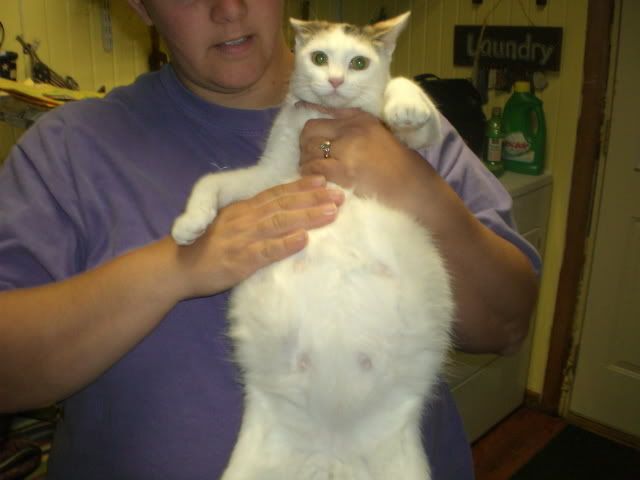 * Nipples swell and become
rosier in color
* Nipples swell and become
rosier in color

